Showing posts with label Jams Pickles & Chutney. Show all posts

Sunday, 14 December 2025

Pickled Red Cabbage Salad


Pickled cabbage is a sugar free alternative to traditional braised red cabbage served with the Christmas roast.  The mild vinegary tang works well with roast turkey, roast pork, or roast lamb.

Serves 4 

Half a red cabbage, cored, quartered & thinly sliced
Half an onion, quartered & thinly sliced
1 tbsp apple cider vinegar
2 big pinches of salt

Put all the ingredients into a bowl and mix with your fingers, scrunching and rubbing the ingredients together.

Leave for as long as you can, ideally overnight, but it can be eaten within 10 minutes of making it you like crunchy vegetables.

Instagram: leesashomemade
Facebook: Leesa's Homemade

Thursday, 24 April 2025

How to remove foam from jam


After years of making chutney and marmalade, I've just started making jam for sale.

Surprisingly, it's not been as easier.  Yes, it is a much quicker process once boiling. But soft fruit 'foams' at setting point (particularly strawberry jam), and this foam sets in the jam.  The finished product tastes delicious, but can be off-putting to more judgy consumers ie paying customers.

My jam making bible has been my 94 year old mother's 1950's Marguerite Patten's Jams, Preserves, & Chutneys, which recommends a small knob of butter to disperse foam and clarify jams and jellies, but I like to keep my preserves simple and dairy free.

Two barely passable batches later, I have googled how to remove foam from jam;

1) Add a small knob of butter or flavourless oil to the cooling jam - this apparently breaks the surface tension and 'pops' the bubbles.  It may shorten the life of your jam.

2) Stir the jam in the same direction as it cools - does reduce the foam slightly, but not to an acceptable level for some customers

3) Leave the fruit to macerate with the sugar overnight - to be tried!

4) Skim the jam with a spoon as it reaches setting point, and as it cools - keep the foam for yourself/children. It still tastes like jam!

5) Lay a sheet of greaseproof paper on the cooling jam then peel off - I was impressed with this method (pic above). It removed most foam, just leaving a few little patches to be removed with a spoon.  I scrapped the foam off the greaseproof paper and put it in a little jar for my daughter.

Instagram: leesashomemade
Facebook: Leesa's Homemade

Thursday, 22 February 2024

Homemade Red Cabbage Sauerkraut


@zoe Nutrition posted an online foolproof guide to how to ferment foods by @kenjcooks in mid December 2023.  This simple guide made fermenting much more straightforward than many other recipes I have read.

So I thought I'd turn my red cabbage coleslaw into a sauerkraut.  Two+ weeks on, this sauerkraut is nothing like coleslaw, but tangy & crisp, and goes well with smoked mackerel, avocado, cottage cheese...

Makes a pickle jar

1/4 red cabbage
1 large carrot
1 small onion, peeled & halved
Table salt

Thinly slice the cabbage and onion, and peel and grate the carrot.

Weigh all the prepared vegetables into a mixing bowl, and add 2% salt. So if your vegetables conveniently weigh 500g, add 10g of salt.

Scrunch the salt into the vegetables with your hands for several minutes until the cells start to breakdown, the cabbage starts to go slightly limp, and liquid starts to be drawn out of the vegetables.

Pack the vegetables firmly into a clean jar and pouring over the liquid from from the mixing bowl.  In order to ferment and not rot, the vegetables need to be covered in brine so no air and bacteria can get to them.  

Use a pickle weight, smaller water filled jar, or large cabbage leaf to push the vegetables into the brine (you may need to add a little water to achieve this).  Put the lid on the jar and push to the side on the kitchen counter.

In a few days bubbles will start to appear on the surface of the liquid.  Burp the jars daily, or leave the lid on loosely.

Different vegetables ferment at different rates, and slower in cooler climates.  Zoe Nutrition recommend waiting at least 2 weeks before starting to eat your sauerkraut.  Two weeks in, my coleslaw sauerkraut is crunchy and tangy almost as if it's been preserved in a mild vinegar. 

After 2 weeks, sauerkraut can be put into the fridge to slow down the fermentation.  However, if you like the tanginess you can always leave it out at room temperature. Mine is living out on the kitchen counter, and almost finished after nearly 3 weeks after starting it.

Instagram: leesashomemade
Facebook: Leesa's Homemade

Wednesday, 29 November 2023

Pear & Date Chutney


Every year I hunt around for my tried and tested Pear & Date Chutney recipe, so I have finally typed it up and posted it so I can find quicker next time.

1kg firm pears, peeled and cubed
2 onions, finely chopped
250g dates
500ml pickling vinegar
500g sugar
1 tsp salt
1 tsp ground ginger (optional)
1/2-1 tsp chilli flakes

Simmer pears, onions, dates, vinegar and spices for 20 minutes to soften the onions.  Add the sugar and salt and simmer for another 20-40 minutes until the chutney is dark and glossy.  Stir frequently to ensure it is not catching on the bottom of the pan.

Pot in sterilised jars and seal with clean lids scalded with boiling water.  Keeps for at least 12 months.

Instagram: leesashomemade
Facebook: Leesa's Homemade

Saturday, 16 September 2023

Pickled Green Tomatoes


Trying @urbanfarmandkitchen's recipe for Pickled Green Tomatoes.

Unusually for me, I've pretty much stuck to the recipe. I just substituted apple cider vinegar for distilled white vinegar, and used my late father's method for working out exactly how much pickling solution you need. So follow the recipe before measuring out the quantities in the ingredients, particulary if you don't have exactly 1lb of green tomatoes (I had 250g so halved the rest of the ingredients).

1lb/450g green unripe tomatoes
1 cup/235ml water
1 cup/235ml apple cider vinegar
1 tbsp salt
1 tsp sugar
1-2 Garlic cloves - peeled, and root end cut off
1 bay leaf
½ teaspoon black peppercorns
½ teaspoon mustard seed - yellow or black
1 sprig of dill (didn't have any)

Cut any larger tomatoes into chunks and smaller tomatoes in halves. You want to expose some of the interior so that they pickle all the way through.

Pack the cut tomatoes into a preserving jar. Half fill the jar with the vinegar and top up with water.  Pour the vinegar and water into a small saucepan, keeping the tomatoes in the jar. Add the  salt and sugar and warm gently until the sugar and salt have dissolved.  Leave to cool.

Poke the garlic, bay leaf, spices and fresh dill into the green tomatoes in the jar.  Pour over pickling solution when it has cooled. Tap the jar to release any air bubbles. Seal and refrigerate. You can start enjoying them within 2 days, but @urbanfarmandkitchen recommend waiting at least 5 days.

Instagram: leesashomemade
Facebook: Leesa's Homemade

Monday, 26 December 2022

Purple Sauerkraut


I came across red cabbage sauerkraut (with beetroot) through @michaelmosely_official Just One Thing podcast on BBC Sounds. I did look a recipe up but it seemed to vary a little in every source, so now I’ve just made my own up.

1/4 large red cabbage (about 500g)
1 medium beetroot
1 turnip (optional)
1 small onion
1 tsp salt

Finely slice the cabbage and onion and place in a large mixing bowl.

Grate the beetroot, and turnip if using. I don’t bother to peel, and just discard any large bits of skin that won’t grate.

Add the grate vegetables to the mixing bowl together with the salt. Squish and mix the vegetables with your hands, taking handfuls and squeezing like you are trying to squeeze the liquid out, and pushing down with hands like you are flattening to the bottom of the bowl. I have heard of people using the end of a rolling pin, and pounding. 

Squish/squash/pound for a few minutes until the cabbage is limp and some liquid is collecting at the bottom is the bowl. 

Take small handfuls and cram them down firmly into a large jar, and pour in any liquid that has accumulated. Cover loosely so the fermentation gases can escape but no bacteria can get in, and leave out on the kitchen counter.

I start eating mine pretty much the next day when it tastes like a undressed red cabbage coleslaw, but ideally leave it a week or longer and it will start to taste like pickled cabbage.

Instagram: leesashomemade
Facebook: Leesa's Homemade
Twitter: leesashomemade

Sunday, 6 November 2022

Fresh Fig Chutney


I was gifted about 3kg of ripe figs yesterday morning.  I have frozen 2 x 1kg and experimented making Fig Chutney with the remaining kilo.  It should go well with cheese.

Makes 4x 340g jars

1kg ripe figs, chopped
500ml red wine vinegar or pickling vinegar
500g sugar
1 garlic clove, peeled & crushed
Juice & zest of 1/2 a lemon
1 tsp cumin seeds (optional)
1 tsp smoked paprika (optional)
1 tsp salt

Simmer all the ingredients, apart from the sugar, in a preserving pan for 20 minutes to soften the figs.

Add the sugar after 20 minutes and simmer for about 40 minutes until the chutney is syrupy rather than runny.

Pot into sterilised jars.  The advice with chutney is let it mature for 3 months before using, but the dregs of this tasted fine when bottling!

Instagram: leesashomemade
Facebook: Leesa's Homemade
Twitter: leesashomemade

Sunday, 26 June 2022

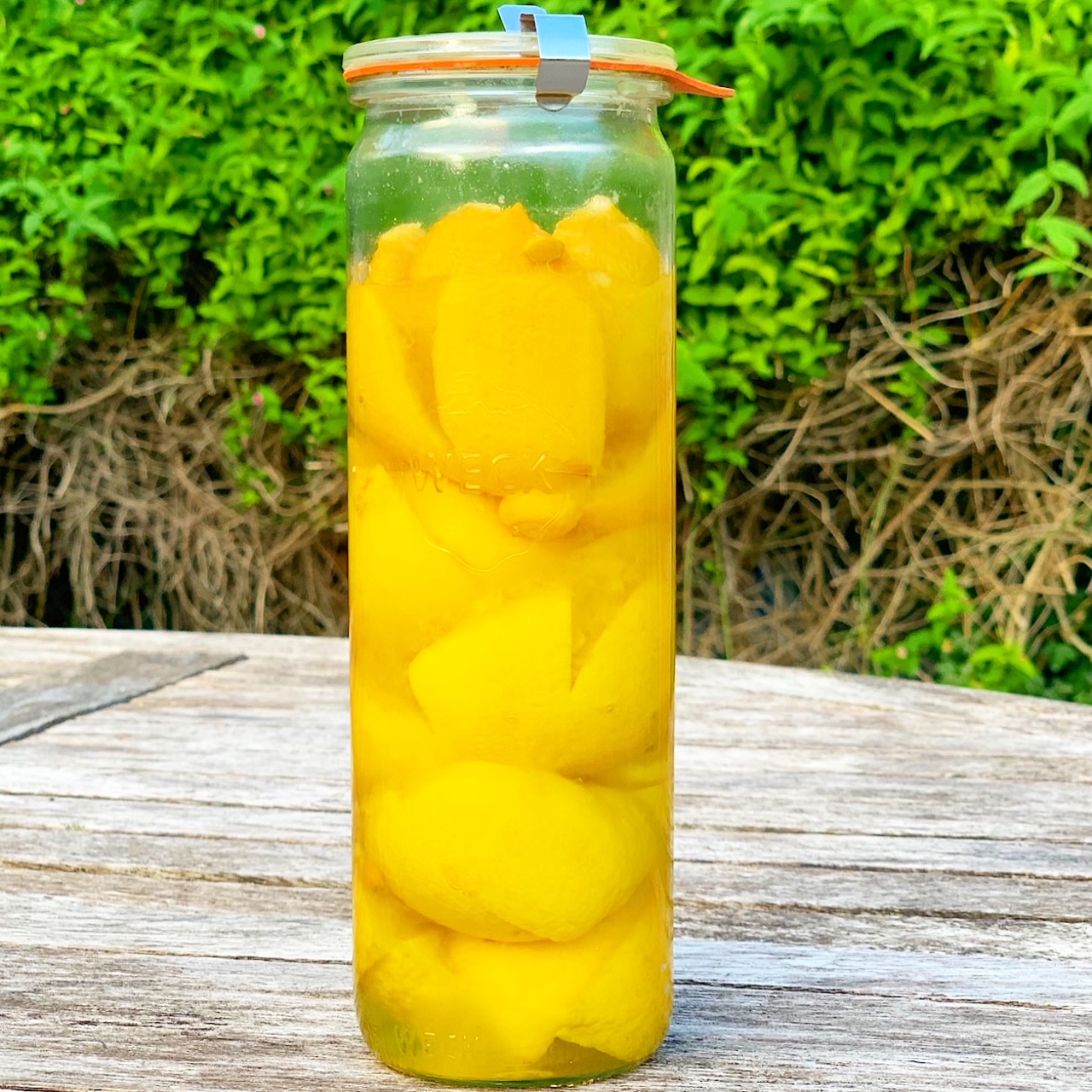
Easy Preserved Lemons


I have been meaning to make my own preserved lemons for ages, and now wish I'd done so sooner as it is so easy, and gives a wonderful kick to savoury dishes.

Small preserving jar
4 lemons 
Salt
Cooled boiled water

Wash the lemons giving them a good scrub with a vegetable brush.

With the stalk end pointing down, cut down ALMOST halving the lemon, then cut again at right angles to make 4 segments/quarters still joined at the bottom that can be opened up like petals.

One by one, cup each lemon in your hand, open the sections up, and spoon in 1 tsp of salt.

Pack the lemons tightly into a sterilised preserving jar and top up with cooled boiled water.

Leave for 3-4 weeks, flipping the jar every few days, for the lemon rinds to soften in the brine.

A lot of recipes tell you to scoop out the pulp before using, and just use the rind.  So far I have just chopped everything up (discarding any pips) and added them to North African dishes like Vegan Tagine, Chicken or Lamb Tagine, and Courgette & Yoghurt.

Instagram: leesashomemade
Facebook: Leesa's Homemade
Twitter: leesashomemade

Sunday, 12 June 2022

Quick Norwegian Pickled Cucumber Salad


This cucumber salad is so quick and easy to make, and takes me back to my expat teens in Norway.

Serves 4 as a side

1 large cucumber
1 tsp salt
1 tsp sugar
2 tbsp apple cider vinegar
1 tsp chopped dill fronds (optional)

Finely slice the cucumber and stir in the other ingredients. It is ready to eat immediately, but improves with standing.

This is a light, refreshing salad that goes well with 'fatty' foods like roasted salmon or Swedish meatballs.

Another dish from a Midsummer's Dinner Party:-
Baked Salmon
Soured Cream & Horseradish Sauce

Instagram: leesashomemade
Facebook: Leesa's Homemade


Wednesday, 5 May 2021

Torshi Left, Egyptian Turnip & Beetroot Pickle


I was treated to Torshi Left made by an Egyptian friend's mother on my arrival in Cairo in 1991 en route to Sharm el Sheik on the Red Sea to learn to dive.  I was thrilled to find a recipe for it in Claudia Roden's Mediterranean Cookery, which I had bought after a previous visit to Egypt.

This is an quick anglicised version I have come up with 

1large white turnip or mooli
2 medium or 1 large beetroot
50ml white wine vinegar
50ml water
1 tsp salt

Peel the turnips/mooli and beetroot, and grate coarsely. Mix together with the remaining ingredients. The original recipe says cut the vegetables into large chunks and soak in vinegar brine for a week for at least a week. I can never wait that long and so came up with this quick grated method that I can tuck into straight away, although the longer it marinades the better the flavour.

Instagram: leesashomemade
Facebook: Leesa's Homemade

Wednesday, 27 May 2020

Kimchi, Spicy Pickled Korean Cabbage


I've been meaning to make kimchi for ages, so when Sainsburys substituted lettuce with Chinese cabbage, this seemed the ideal opportunity.

Makes: 1 large (1L) preserving jar

1 litre water
4 tbsp sea salt
1 Chinese cabbage
3 carrots
1 mooli, or 2 medium turnips
2 small onions
2 garlic cloves
5cm-piece fresh ginger
1 tbsp gochugaru powder or 1 tsp cayenne pepper (I used cayenne powder and it is very fiery!)

Cut the cabbage into quarters lengthways. Coarsely chop the quarters. Peel the carrots and mooli/turnips and grate.  

Place the vegetables into a large plastic mixing bowl, pour in 1 litre of cold water and the salt. Mix around well with your hands to help the salt dissolve.  Find a plate that just sits inside your bowl and weight cover the cabbage keep it under the brine and leave for 8-24 hours.

When the brining time is up, peel and roughly chop one onion, garlic, and ginger. Put into a food processor with the chilli and enough brine from the vegetable to process into a paste. Thinly slice the other onion.

Drain the cabbage, reserving a little brine. Taste for saltiness; if too salty rinse in cold water, or if  not salty enough sprinkle on a little more salt and taste again.

Combine the vegetables, sliced onion, and paste in the bowl you soaked the cabbage in.  Squeeze the cabbage gently with your hands as you mix it.  This helps break down the cell walls in the cabbage, and release it's juices,

Pack into a wide necked preserving jar, pushing the cabbage down with your hand so it is covered with liquid.  Add some the reserved brine if needed to ensure the cabbage is covered in liquid.

Scrape down and clean the inside of the jar with a spatula then weigh the mixture down with a flat plate or plastic lid that fits inside the jar, with a weight on top (like a smaller jar filled with water and sealed). Cover the jar with a muslin square or tea towel so it can breathe, and secure. Do not close the lid tightly,to allow the fermentation gases to escape. 

Leave to ferment in a warm place at around 20-25°C. If cooler it just takes longer

Check and taste daily, making sure the cabbage is covered with brine. Depending on your taste and the room temperature, this can take around 3-14 days. It’s ready when it tastes sour and tangy (and there is a smell like leaking gas in the kitchen!).

Pack tightly into warm, dry sterilised jar leaving a 5mm gap between the top of the vegetables and the rim and seal.

Keeps for up to 6-8 months unopened in a cool, dark cupboard. Once opened, keep in the fridge and eat within 4-6 weeks.

I've had this served stirred through rice as a cold salad in a Korean cafe in New Zealand, as as a side in Wagamama's.  The recipe above, using cayenne, is incredibly spicy and you would only want little serving!

Twitter: leesashomemade
Instagram: leesashomemade
Facebook: Leesa's Homemade

Saturday, 12 January 2019

Quick Pickled Red Cabbage


The first time I made Jamie Oliver's Lamb Kofta Flatbreads I didn't make the red cabbage pickle.  Tonight, however, I have a red cabbage that I am slowly dismembering into various salads.

Serves 4

500g red cabbage
2 tbsp red wine vinegar
Salt & pepper

Thinly slice the cabbage, then scrunch together with the vinegar and salt in a bowl.  Leave as long as you can for the cabbage to soften - hours or just before you assemble the wraps.

Twitter: leesashomemade
Instagram: leesashomemade
Facebook: Leesa's Homemade

Saturday, 29 September 2018

Sweet Chilli Jam


After a day searching for the recipe I used last year, I've had to give up and make more Sweet Chilli Jam from memory (and taking bits from different online recipes).  So I'm jotting it down here, quickly, so I can find it again next time I want it.

500g peeled, cored, & chopped cooking apples
300g mild red chilli peppers, de-seeded and roughly chopped
500ml water
1kg granulated sugar

Start by preparing the apples.  Add the chopped apples to a preserving pan with the water and bring to the boil then turn down to a simmer whilst you prepare the chillis.

Add the chopped chillis and the sugar.  Once the sugar dissolves blitz the mixture with a stick blender.  Be careful with your eyes though as hot sugar with chilli will most definitely sting!  I wore a pair of safety glasses much to my children's amusement, because they were to hand.

Boil briskly for 10 minutes before testing for a set on a chilled saucer.  Boil again for 10 minutes if not set, and test again.

When set bottle in sterilised jars.  Ready immediately.  Eat with cold meats, cheese, or barbecued meats.

Twitter: leesashomemade
Instagram: leesashomemade
Facebook: Leesa's Homemade

Sunday, 25 February 2018

Simple Plum Chutney


Plum Chutney is probably one of my best selling chutney's at Alresford Country Market.  Problem is I can never remember which recipe I based it on.  Finally, after a lot of googling I found it on Tesco's website (Spiced Plum & Ginger Chutney) and am posting my variation of it on my blog for posterity.

Makes 4x 450g jars

750g plums
2 tsp ground ginger (optional)
2 onions, peeled and finely chopped
1 clove garlic, peeled and finely chopped
125g sultanas
400g sugar
450ml pickling vinegar

Remove the stones from the plums and chop into 1 cm cubes, particularly if firm.  Put everything in a saucepan. Bring to the boil, reduce the heat and simmer for 40 minutes. Stir frequently and the mixture will become thick and glossy.

Transfer to sterilised jars and seal with new or sterilised lids immediately

Sterilising jars and lids - Use clean, dry jars.  Either wash in the dishwasher or place clean jam jars in cold oven and heat to 150C, then leave in the hot oven for 10 minutes.  If re-using lids, put through the dishwasher and place in a bowl of boiling water as you start to bottle the chutney.

Twitter: leesashomemade
Instagram: leesashomemade
Facebook: Leesa's Homemade

Thursday, 16 November 2017

My Dad's Pickled Onion Recipe


My father died in May this year.

Leafing through my printed out seasonal recipes I came across a splattered print out of this recipe.  I will never delete this email, or any others he sent me.

------

To:         Leesa
From:    Dad
Date:     26 October 2010, 02.58
Subject: Pickled Onions

It's about quarter past two, can't sleep, so I thought I'd have an Ovaltine and give you my recipe--

Peel the onions, I prefer to use smallish ones about 1" (2.5cm) in diameter or small shallots.  Don't get bigger ones and cut them.  Place in a metal or enamel bowl and sprinkle with sea salt. (If you use ceramic bowl, the strong salt plays havoc with the glaze). Cover, shake when you pass by to ensure the thick brine always spreads over the onions and leave for 24 hours.

Drain onions and place in jars without washing. To ascertain the amount of malt vinegar you'll need, fill up the jars and pour off into a pan and bring up to the boil. Turn off.

Make up a package of pickling spice for each jar. You'll need 4" squares of some gauze-like thinnish permeable cloth (as I told Chris, my secret is to use unwashed Y-fronts....) and I suggest the easiest and best way is to get proprietary pickling spice, I always crush it. Otherwise you'll need to crush coriander, black pepper corns, mustard seed, small dry hot chillis, ginger, allspice. Put about a dessertspoonful of spice in each cloth square and tie up into packages. Add to the warm vinegar,simmer very gently for about 10 mins. Put a package of spice in each jar of onions and pour over the spiced vinegar.

Screw on the caps, but put a layer of cling film to protect the lids from the vinegar.

Leave for at least 3 months and that's it.

Ah well, I've finished my Ovaltine - let's see if can get some sleep....zzzzz  nite nite!!

Luv to you all and some (but not a lot) of sympathy for him..........

Dad XXXXX
------

Twitter: leesashomemade
Instagram: leesashomemade
Facebook: Leesa's Homemade

Tuesday, 26 September 2017

Quince Jelly


My elderly aunt got carried away when I visited her last Friday, and picked me loads of quinces from their garden.  I've never seen, left alone cooked a quince before and I'm not sure they were quite ripe, as most quince recipes talk about the flesh turning pink when cooked.  And mine didn't.  Instead I have a beautiful honey/amber jelly with a very citrusy tang.  I now need to work out what to use it with.

1kg quince
1l water
1kg sugar approx
Juice of 1 lemon (if using ripe quince)

When making a jelly, I work on the principle of simmering 500g of fruit with the same amount of water ie 500ml.  So, with the quince, I quartered them and added the fruits, seeds, core, peel and everything to the pan and simmered with a lid on for half an hour until the fruit was soft and pulpy.

Strain the fruit pulp through a jelly bag overnight.  Weigh the drained fruit pulp the next day and add the same volume of water to the pan and simmer again for 20 minutes before straining again for a couple of hours.

When all the fruit juice has drained through, measure the liquid into a pan with a measuring jug and add 500g of sugar for every 500ml of liquid and the lemon juice if using ripe fruit.  Bring to the boil and then leave on a rolling boil for 10 minutes taking care it doesn't boil over.

After 10 minutes check for a set on a chilled plate.  When a spoonful of cold jelly wrinkles when you push your finger through it, it is done.  Take the jelly of the heat.  Jelly does seem to create a scum very easily so pour gently through a sieve  into sterilised jars and seal.

Monday, 11 September 2017

Piccalilli (Hot Mustard Bean, Cauliflower & Courgette Pickle)


Been meaning to try this recipe for quite a while.  Some friends made it last year and it was delicious.

I've followed the Hairy Biker's Hot Mustard Pickle recipe to the letter.  Yes, it does seem a lot of salt but I have to say I can't taste it in the remnants in the pan.  And maybe do not cook the vegetables so long? My cauliflower has lost it's crunch. But there is another month before I am supposed try it.

250g green beans, sliced into 1cm pieces
500g cauliflower, cut into 1cm cubes
250g courgette, cut into 1cm cubes
100g fine sea salt
3 onions, finely chopped
300ml malt vinegar
300ml white wine vinegar (I only used malt vinegar)
1 heaped tbsp English mustard powder powder
1 heaped tbsp ground turmeric
1 tsp ground ginger
1 tsp dried chilli flakes
25g cornflour
250g sugar

Mix the salt thoroughly into the beans, cauliflower, and courgette in a non metallic bowl, cover, and leave for 24 hours. After 24 hours, rinse the vegetables thoroughly in several changes of water.

Simmer the onions in the malt vinegar for 15 minutes whilst you mix the dried spices and cornflour into 5tbsp of the remaining 300ml of vinegar.  Add the sugar and left over vinegar to the pan with the onions, and the drained vegetables.  Simmer for 10 minutes (I might try 5 minutes next time).

Add the spice paste and stir through until it thickens.  Here the Hairy Bikers cook the vegetables for a further 10 minutes, but I would take the pickle of the heat once the sauce has thickened and bottle it straight away.  After all, the heat of the sauce will continue cooking the vegetables for a while longer anyway.

Seal in sterilised jars and leave for a month before using.  I, however, had a little bit leftover from my 5 jars made at the weekend and used it in a ham sandwich yesterday.  It was fantastic!

Post Script: A quick google has turned up River Cottage's Pam Corbin's recipe for Piccalilli.  I note she does not cook the vegetables at all, but instead just stirs them into the hot sauce.  Next time...

Instagram: leesashomemade
Facebook: Leesa's Homemade

Greengage Jam


Sadly the shop bought greengages I bought here in the UK aren't a patch on the super sweet Reine Claude greengages bought in France.  So maybe making them into jam will make them sweeter?

Makes 3x 340g jars + 1x 180g jar

1kg greengages
850g granulated sugar, approximately
Juice of 1 lemon

Stone the greengages, weighing the greengage flesh as you want the same amount of sugar as the weight of the stoned fruit.

Chop the fruit fairly small (the skins don't break up during the cooking so bear this in mind with the size of fruit chunks you settle on).  Simmer the diced fruit with an expresso cup (50ml) of water with the lid on for 20 minutes, stirring from time to time until the fruit pulp has broken down.

Add the sugar and lemon juice and bring to a rapid boil.  Boil for 5 minutes whilst you sterilise the jars in the oven.  Test for a set on a cold saucer.  If not set continue boiling for another 5 minutes then test again.  Having made two batches of this jam in as many weeks I find it tends to reach setting point after about 5-10 minutes of boiling.  If you leave it too long you risk the jam becoming positively rubbery!

Pour into sterilised jars and seal with sterilised lids.

Tuesday, 29 August 2017

Sloe Gin Jelly

Searching for damsons in my mother's garden I came across a large crop of ripe sloes, so many in fact that I had enough for Sloe Gin (500g of sloes are currently waiting in the freezer for me to buy some cheap gin), and for me to experiment making Sloe Gin Jelly.

My recipe below has 1 shot of gin in.  I'm not sure I can taste it.  But it is a wonderfully tart jelly that would go well in a gravy, with red meat, game, strong cheddar, as much as on toast.  Apparently I have a long wait until my new damson tree fruits, but sloes turn out to be a good alternative.

500g sloes
500ml water
1kg bramley apples
500g sugar
1 shot gin (optional)

Simmer the sloes in the water, covered for about 20 minutes until the fruit is all pulpy.  Roughly chop the apples and add to the sloes, skin, cores and all.  Simmer for another 20 minutes until the apple has disintegrated.

Strain the fruit pulp through a jelly bag overnight.

Measure the collected fruit juice (mine came to 500g/500ml) and add the same weight in sugar to a clean pan.  Bring to the boil and boil rapidly for 10 minutes before checking to see if the jam is set.  Seal in sterilised jars.

Instagram: leesashomemade
Facebook: Leesa's Homemade

Monday, 17 July 2017

Sweet & Sticky Rhubarb Chutney

The start of rhubarb chutney
I cut the last of this year's rhubarb this morning to ensure I have enough chutney for the Christmas Country Markets.

I found this recipe on the internet many years ago, and will put it back there for posterity.  It says it is good for end of season rhubarb

Makes 2.3 kg (5 lb)

Rhubarb - 900g (2 lb)
Garlic - 15g (½ oz) 4 cloves
Root ginger - 25g (1 oz)
Lemons - 2, zest only
Salt - 1tsp
Cayenne pepper - 15g (½ oz) 2 tsp
Sultanas - 450g (1 lb)
Demerara sugar - 900g (2 lb) 1.5lb
Vinegar - 600 ml (1 pint)
 
Finely dice the rhubarb.  Put the roughly chopped garlic and root ginger into a blender cup and liquidise with a little of the vinegar.  Add all the ingredients into a large pan and simmer gently, stirring frequently, until the mixture thickens.  Pot the chutney while hot into sterilised jars.  Keep it for 3 months before using.